
Chain Link Gate Locks: How to Choose & Install the Right Lock for Chain Link Fences
Choosing the Right Lock for a Chain Link Gate
A good chain link gate lock needs to do more than keep the gate closed. It needs to fit securely, latch reliably, stand up to outdoor use, and work for the people using the entrance every day.
Whether you’re securing a backyard, a commercial property, or a storage yard, the right choice starts with the gate itself and how it’s used.
An entrance used several times a day has different requirements from a double gate opened occasionally for vehicle access. You’ll also need to decide whether you want keyed or keypad entry, how much security you need, and whether the gate should lock automatically when it closes.
Just as important is how the hardware attaches to the frame and aligns with the post or second gate leaf.
This guide explains the main chain link fence lock options, what to check before buying, and how to install and adjust your chosen hardware for dependable operation. We’ll help you choose a lock for your chain link fence gate that suits both the installation and your everyday access needs.
Popular Options for Chain Link Gates:
What to Check Before Choosing a Chain Link Gate Lock
Before comparing locks, take a few measurements and decide how the entrance needs to work. A lock that suits the gate’s construction and your access requirements will be easier to install and use reliably.
Check the Gate Frame and Posts
Chain link gates commonly have round tubular frames and round fence posts. That curved surface matters when you’re choosing a lock: hardware designed for a flat mounting surface may need an adapter to attach securely.
Start by checking the shape and outside dimensions of the gate frame. For round tubing, measure the outside diameter in inches. Then check the post, or second gate leaf, that will support the receiver. Both sides of the locking arrangement need a secure mounting point, with enough space for the lock, receiver, and fasteners.
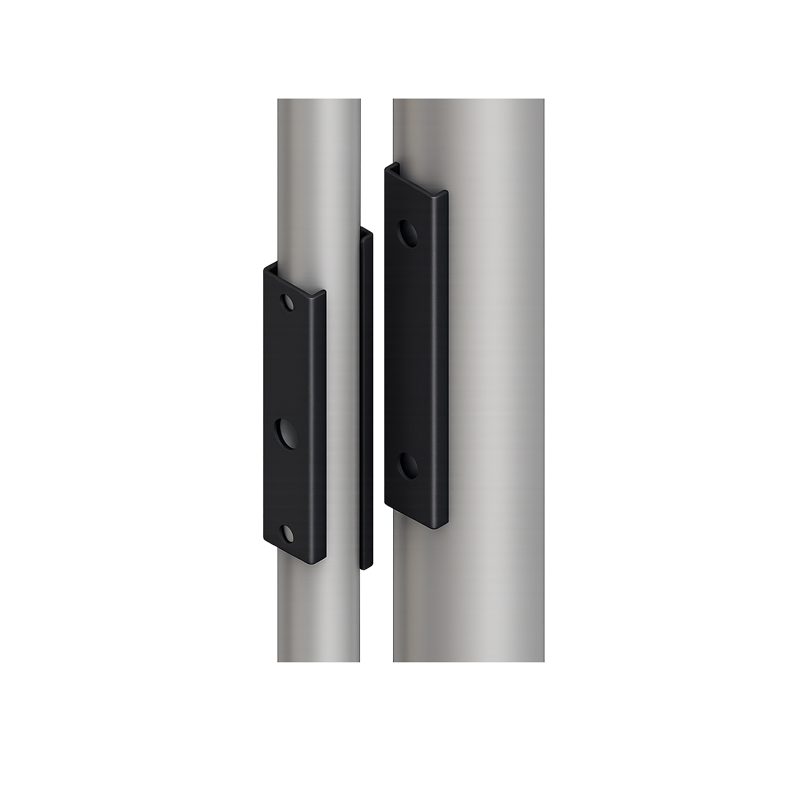
For round chain link gate frames, Gatemaster’s Superlock Round Bar Adapter provides a mounting option for Superlock locks. The RBA kit is for the lock only, while the RBAK kit includes adapters for both the lock and gate post.
Check the chosen lock, adapter, and receiver against your gate measurements before ordering. Don’t assume that every bolt-on gate lock will attach directly to round tubing, or that the lock and receiver will need the same mounting arrangement.
Single or Double Gate?
A single gate usually latches against a fixed post. On a double gate, the lock typically engages with a receiver on the other gate leaf, so both leaves need to stay aligned.
Decide which leaf will normally open for everyday access and how the other will be secured. A double chain link gate lock arrangement needs to account for movement in both leaves, as well as how you’ll release them when the full opening is needed.
How Does the Chain Link Gate Need to Lock?
Think about who needs access and how they’ll enter and exit. A keyed lock may suit an entrance used by a small number of people. A keypad gate lock can make shared access more convenient without distributing physical keys.
If the gate needs to secure automatically, check exactly what happens when it closes. Self-latching means the latch engages; it does not necessarily mean a key or code is needed to reopen the gate. Self-closing is a separate function that requires suitable closing hardware.
How Often Is the Gate Used?
An occasionally used backyard gate has different demands from a commercial entrance used throughout the day. Consider how often people pass through, how convenient the opening method will be, and whether users can reliably secure the gate after each visit.
For regular shared access, also consider who will manage keys or change codes. Choose hardware suited to outdoor use and the expected frequency of operation, with an installation that allows routine inspection and adjustment.
Key Points on What to Check Before Choosing a Chain Link Gate Lock
- Check the frame shape, dimensions, and mounting points before choosing a lock. Round tubing may require a compatible adapter.
- For double gates, plan how both leaves will stay secure and aligned.
- Choose keyed or keypad access to suit the people using the entrance and how they need to enter and exit.
- Confirm whether the gate needs to latch, lock, or close automatically. These are separate functions.
- Match the hardware to outdoor conditions and frequency of use, and if required plan who will manage keys or access codes.
What Type of Lock Can You Use on a Chain Link Fence Gate?
Chain link fence lock options include basic locking latches and bolt-on locks with keyed or keypad access. For an entrance used regularly, Gatemaster’s Superlock range brings the locking mechanism and everyday operation together in a unit mounted to the gate frame. Here’s how the options compare.
Standard Locking Gate Latches
A basic chain link gate locking latch may use a separate padlock or a built-in key lock.
Padlockable versions can suit occasional access, but handling and reapplying the padlock becomes inconvenient on a busy entrance. An exposed padlock shackle can also provide an accessible point for attack, so security depends on the padlock’s design and the strength of the latch and its fittings.
For regular access, consider a bolt-on keyed or keypad lock that integrates locking into the gate’s everyday operation.
Bolt-On Keyed Gate Locks
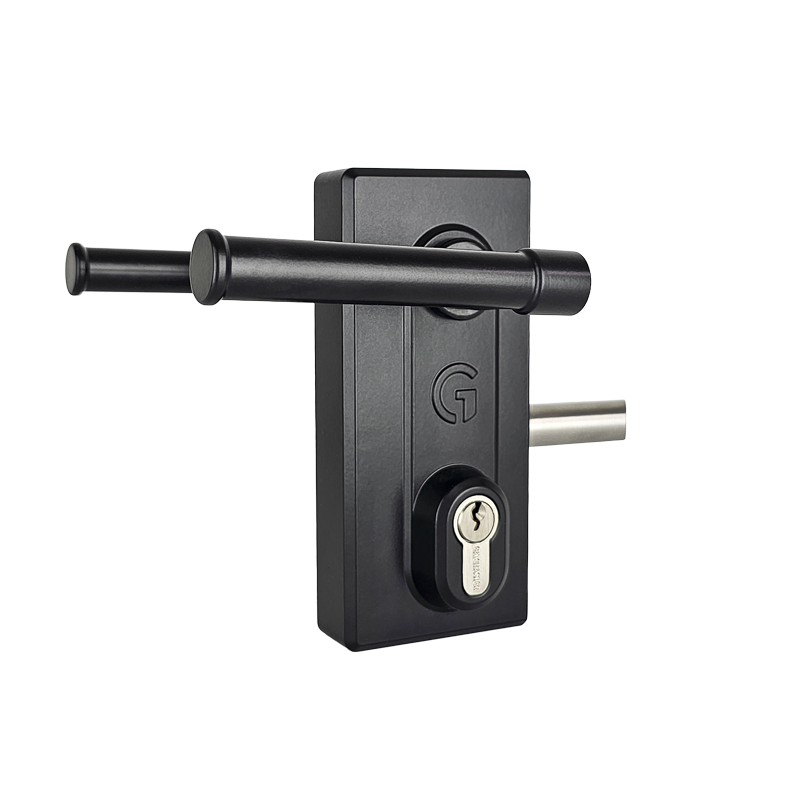
For familiar handle operation with the ability to lock the gate using a key, consider Gatemaster’s Superlock 2.0 Bolt-On Latch Deadlock. The handles operate the latch during everyday use, and turning the key deadlocks it when you need to secure the entrance.
This combines latching and locking in one unit, so there’s no separate padlock to remove, store, and reattach. Handles and keyed access are provided on both sides, making it an option for gates where users need that arrangement.
Choose this model when you want to control when the gate is deadlocked. Closing it engages the latch, but users still need to turn the key to deadlock it.
The lock bolts onto a compatible gate frame. For round chain link tubing, use the appropriate Superlock Round Bar Adapter and check the frame dimensions and receiver arrangement before ordering.
Bolt-On Keypad Gate Locks
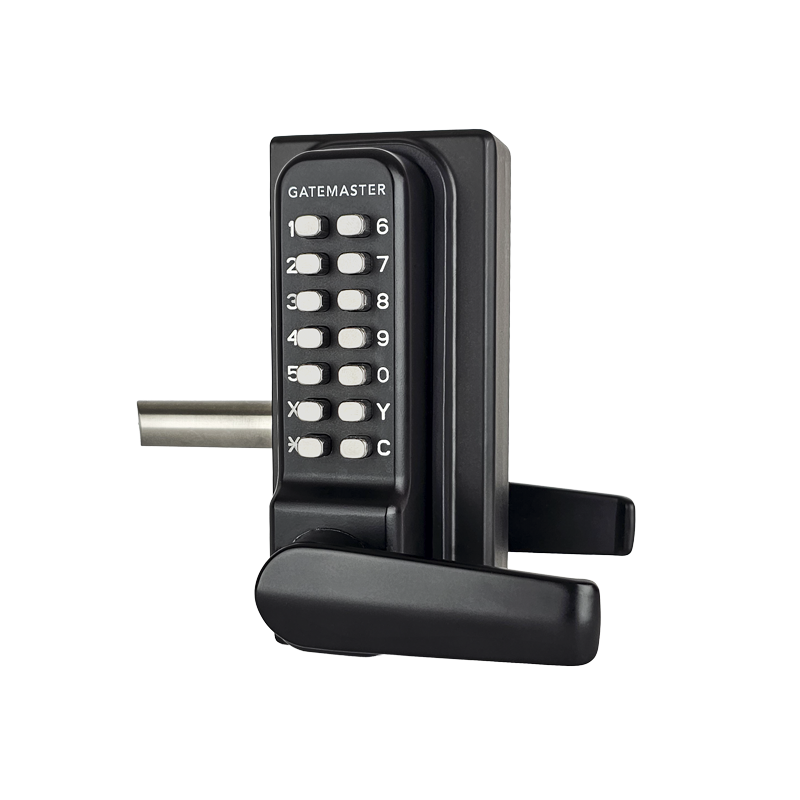
If several people need access, a chain link fence gate lock with a code removes the need to distribute physical keys. Gatemaster’s Superlock mechanical keypad locks combine code entry with bolt-on installation and operate without batteries or electrical wiring.
The Superlock 2.0 Single-Sided Keypad Lock provides code entry from outside and a handle for exit from inside. It automatically latches when the gate closes and also has a hold-back function for times when the latch needs to remain retracted.
The Superlock 2.0 Double-Sided Keypad Lock provides code-controlled operation on both sides. Choose between these arrangements based on how people need to enter and leave.
A bolt-on keypad lock is a practical option for shared entrances where handling keys or a separate padlock would interrupt regular access. Plan who will manage and change the code, and confirm the mounting requirements for your round gate frame.
Locks for Double Chain Link Gates
A double chain link gate lock needs to work as part of an arrangement that secures both gate leaves. Typically, the active leaf carries the lock and the other leaf carries the receiver.
The inactive leaf must be held securely so the receiver provides a stable point for the lock to engage. A suitable drop rod or bolt may form part of that setup, but check whether it can be released while the gate is locked. Both leaves need to stay aligned for dependable operation.
A double-gate arrangement is different from a double-sided lock: “double-sided” describes how the lock is operated from either side of the entrance.
Key Points on What Type of Lock to Use on a Chain Link Gate
- Basic padlockable latches add a manual step each time the gate is secured.
- Gatemaster’s bolt-on latch deadlock combines handle operation with manual keyed deadlocking.
- Superlock keypad locks provide keyless access without batteries or wiring, with single-sided and double-sided options.
- Confirm round-frame mounting compatibility and, for double gates, how both leaves will be secured.
What Is the Best Lock for a Chain Link Gate?
The best lock for a chain link gate is the one that fits the gate securely, provides the access you need, and suits how often the entrance is used. For regular residential or commercial access, a bolt-on keyed or keypad lock is a practical starting point: it brings locking into the gate’s everyday operation without a separate padlock to handle.
Look for a Secure Fit and Straightforward Installation
Because chain link gates typically use round tubular frames, the best lock should either fit that tubing directly or have a purpose-made adapter for secure mounting.
Ease of installation matters too: look for a bolt-on design with clear fitting instructions and compatible mounting hardware for both the lock and receiver. Gatemaster’s Superlock Round Bar Adapter allows Superlock locks to be fitted to round gate sections, making them a practical option for straightforward installation when correctly matched to the frame dimensions.
Compare Chain Link Gate Locks by Application
Use the comparison below to narrow down your choice.
| Application | What to prioritize | Option to consider |
|---|---|---|
| Backyard or side gate with keyed access | Handle operation and control over when the gate is locked | Superlock 2.0 Bolt-On Latch Deadlock, manually deadlocked with a key |
| Shared residential or commercial entrance | Keyless entry and convenient exit | Superlock 2.0 Single-Sided Keypad Lock, with code entry outside and a handle inside |
| Entrance requiring a code on both sides | Code-controlled entry and exit | Superlock 2.0 Double-Sided Keypad Lock, where this exit arrangement is appropriate |
| Gate that needs to secure after each use | Automatic latching with restricted opening from the entry side | A suitable Superlock keypad lock, with any hold-back function disengaged and suitable closing hardware if automatic closing is needed |
| Double chain link gate | Secure alignment and control of both leaves | A compatible keyed or keypad lock with a receiver on the secured inactive leaf |
| Round tubular gate frame or post | Secure mounting for the lock and receiver | A compatible Superlock lock with the appropriate Round Bar Adapter kit |
Choose Keyed Access for Manual Control
The Superlock 2.0 Bolt-On Latch Deadlock suits an entrance where you want normal handle operation while the gate is unlocked, then keyed deadlocking when you need to secure it. This makes sense when a small number of people manage the keys and someone is responsible for locking up.
Choose Keypad Access for Shared Use
For households, employees, or contractors sharing an entrance, a keypad lock avoids the need to issue and collect keys. Choose the single-sided keypad model for code entry and an inside exit handle, or the double-sided model when code access is needed on both sides. Both use mechanical keypads, so no electrical supply is required.
Whichever option you choose, confirm the frame dimensions, gate gap, and receiver position before ordering. For round tubing, include the appropriate Superlock Round Bar Adapter. Even a well-chosen lock needs secure mounting and consistent gate alignment to work reliably.
Key Points on What Chain Link Gate Lock is Best
- Choose a keyed latch deadlock when you want to decide when the gate is deadlocked.
- Choose a keypad lock when shared access without physical keys is the priority.
- Match the exit method, mounting hardware, and closing action to the installation.
Chain Link Gate Lock vs. Padlock
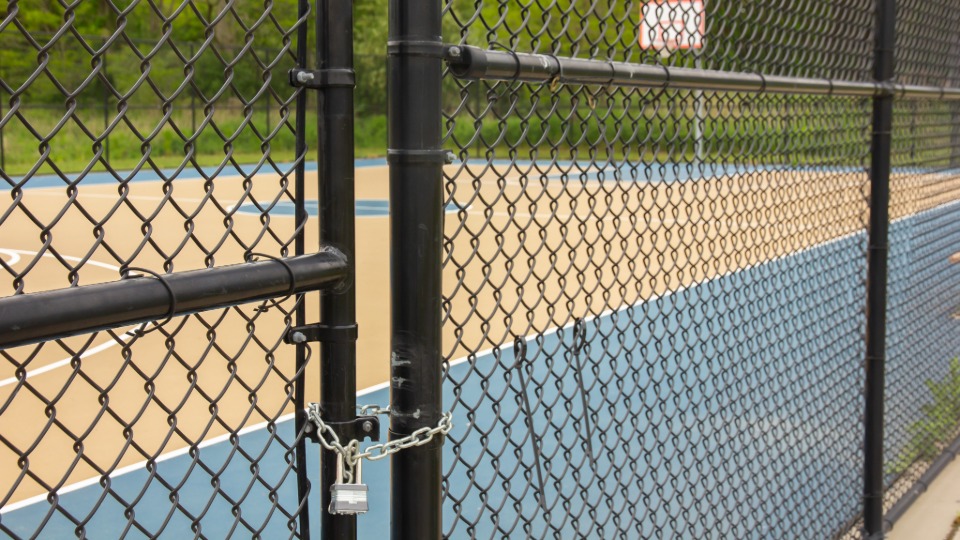
A padlock and chain can be a practical way to secure a chain link gate that is opened occasionally. For an entrance used throughout the day, a bolt-on gate lock makes access more convenient by keeping the locking mechanism on the gate, ready to operate with a key or code.
The difference is in both daily use and the complete installation. A padlock relies on the latch, hasp, or chain it secures. An integrated gate lock relies on its mounting, latchbolt, and receiver. Compare the whole arrangement when deciding which suits your gate.
| Consideration | Padlock setup | Bolt-on gate lock |
|---|---|---|
| Everyday access | A separate padlock must be unlocked, released, and secured again | The lock stays mounted to the gate and operates using a key or keypad |
| Shared access | Keyed and combination options are available, but users still handle the separate padlock | Keypad options provide code entry as part of normal gate operation |
| Securing after use | Users must reapply and lock the padlock | Depends on the model: a keyed latch deadlock needs manual deadlocking; suitable keypad locks restrict entry once the latch re-engages |
| Security considerations | An exposed shackle can provide an accessible point for attack; the latch and fittings also matter | No separate padlock shackle, but protection still depends on the lock, receiver, and secure mounting |
| Installation | May use an existing compatible padlockable latch, or require a hasp or chain | Needs a compatible frame, correctly positioned receiver, and suitable adapters for round tubing |
For a frequently used chain link gate, Gatemaster’s Superlock 2.0 Bolt-On Latch Deadlock combines handle operation with keyed deadlocking. If you want shared access without distributing keys, the Superlock 2.0 Single-Sided Keypad Lock provides code entry outside and a handle inside, without batteries or wiring.
A key advantage of an integrated lock is that it removes the separate padlock from the daily routine. Choose a lock and receiver that fit securely, and use the appropriate round-frame adapter where required.
Key Points for Selecting Chain Link Gate Locks vs Padlocks
- A padlock can suit occasional access, but adds handling each time the gate is used.
- A bolt-on keyed or keypad lock makes frequent access more convenient.
- Compare the complete installation: exposed components, mounting strength, and reliable engagement all affect security.
Finding the Right Gatemaster Lock for Your Chain Link Gate
Choosing the right lock starts with your gate and the way you use it. Frame size, single or double leaves, access requirements, and closing action all affect which locking solution will work reliably. Gatemaster’s Superlock range offers bolt-on keyed and mechanical keypad options, with purpose-made adapters for round chain link gate frames.
Match the Lock to Your Access Needs
For handle operation with manual keyed locking, the Superlock 2.0 Bolt-On Latch Deadlock lets you decide when to deadlock the entrance. For shared access without physical keys, choose a single-sided keypad lock with an inside exit handle, or a double-sided keypad lock where code-controlled access is needed on both sides.
If the gate should secure after each use, discuss that requirement when selecting the lock. The locking function, any hold-back setting, and the gate’s ability to close fully all need to work together.
Get the Right Fit for Round Tubing
The Superlock Round Bar Adapter allows Superlock locks to mount securely to round gate sections. Select the appropriate kit for the lock and, where needed, the gate post. Checking the frame dimensions, gate gap, and receiver position helps you plan a straightforward bolt-on installation.
Talk to Gatemaster About Your Gate
Not sure which combination you need? Have your gate measurements and a few clear photos ready, along with whether you want keyed or code access and how the gate should operate from each side.
Contact Gatemaster for help choosing your chain link gate lock, confirming the mounting arrangement, or finding your nearest supplier.
