
3 Easy Steps To Find The Lock Handing
When choosing a gate lock, it’s important to understand whether your gate is left or right-hand hung. The handing of your gate determines which lock configuration is suitable, making it an important consideration before selecting a lock. The article walks through 3 easy steps to identify the lock handing.
How To Identify The Lock Handing You Need:
| Step | What To Do | What To Look For |
|---|---|---|
| 1. Stand outside the gate | Stand on the outside or unsecure side of the property, facing towards the gate. | You should be looking towards the inside of the property. |
| 2. Locate the hinges | Look at which side of the gate the hinges are fitted. | The hinge position determines the handing. |
| 3. Hinges on the left | If the hinges are on your left-hand side, the gate is left-handed. | Choose the left-handed lock where handing needs to be specified. |
| 4. Hinges on the right | If the hinges are on your right-hand side, the gate is right-handed. | Choose the right-handed lock where handing needs to be specified. |
| 5. Check the lock range | Before ordering, check whether the lock is reversible or supplied in a fixed handing. | This determines whether you need to select left or right when ordering. |
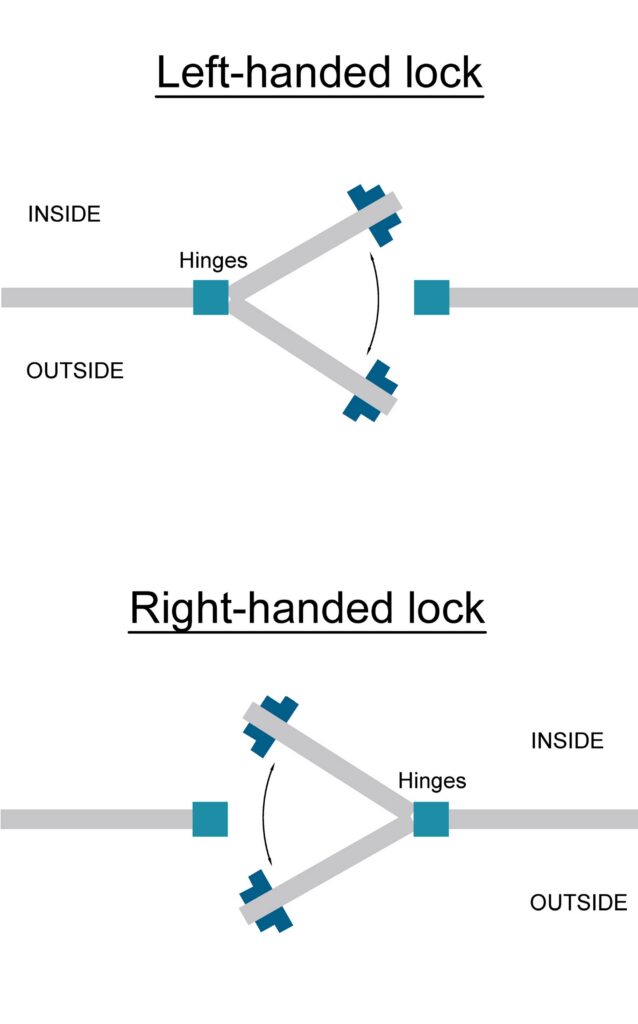
The diagram illustrates the difference between left-handed (L.H.) and right-handed (R.H.) gate locks, showing the gate’s opening direction and lock position. Use this as a guide when selecting the correct handing for our SelectPro range. Our Superlock range features universal handing, making it suitable for both left and right-hand configurations.
Do You Need To Order A Left Or Right-Handed Gate Lock?
That depends on the Gatemaster lock range you choose.
Superlock 2.0 gate locks are reversible at the point of installation. This means you do not need to choose a left- or right-handed version when ordering. The installer can configure the lock to suit the handing of the gate during installation.
SelectPro gate locks are handed. For handed models within the SelectPro range, you will need to establish the gate handing before ordering and select the appropriate left- or right-handed version.
For example, take a look at our DGLSW:
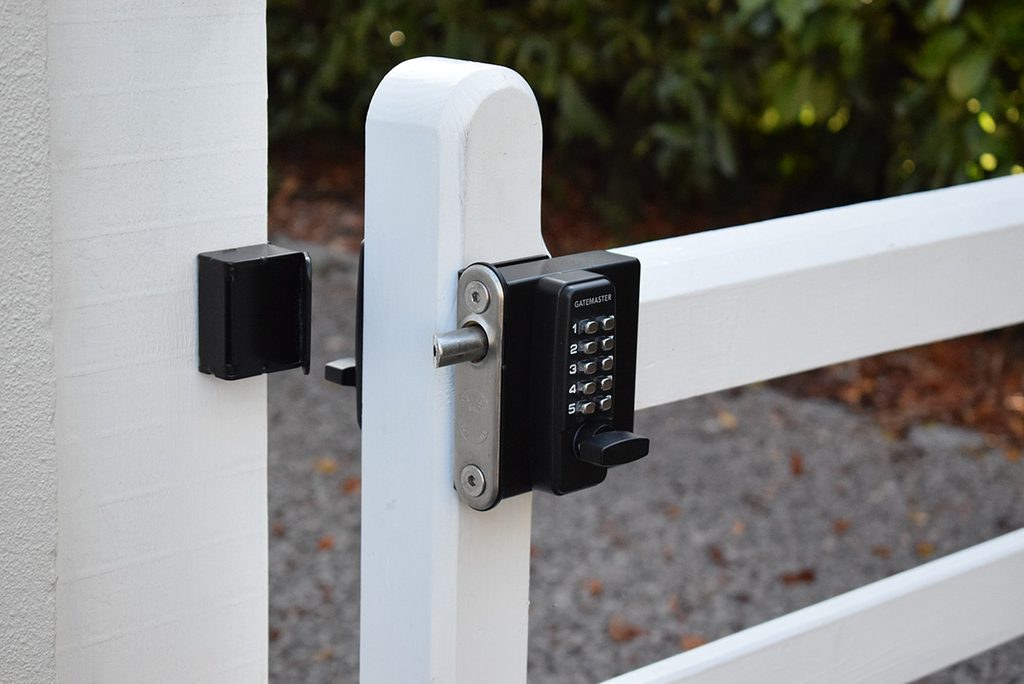
It has keypad access on the outside and a thumbturn on the inside.
The hinges are on the right as viewed from the outside of the gate, therefore you will need the DGLSWR.
| Lock Range | Handing | What You Need To Do |
|---|---|---|
| Superlock 2.0 | Reversible | No need to specify left or right when ordering. Configure the lock to suit the gate during installation. |
| SelectPro | Left- or right-handed | Check the position of the hinges and order the correct handing for the gate setup. |
Examples Of Right-Handed Gates:


Examples Of Left-Handed Gates:


Handing Of Double-Leaf Gates:

Assuming we are standing on the outside, as the hinges of the leaf with the lock on are on the left, they need a left-handed lock.

Assuming we are standing on the outside, as the hinges of the leaf with the lock are on the right, this gate will need a right-handed lock.
The handing diagram applies to our SelectPro range, have a look at some of the different styles we offer:


Why Lock Handing Matters
On a handed gate lock, choosing the wrong configuration can mean the lock will not suit the direction and layout of the gate. Checking the handing before ordering helps avoid installation problems, returns and delays on-site.
With a reversible lock such as the Superlock 2.0 range, this decision can instead be made during installation, giving installers greater flexibility when fitting the lock to the gate.


